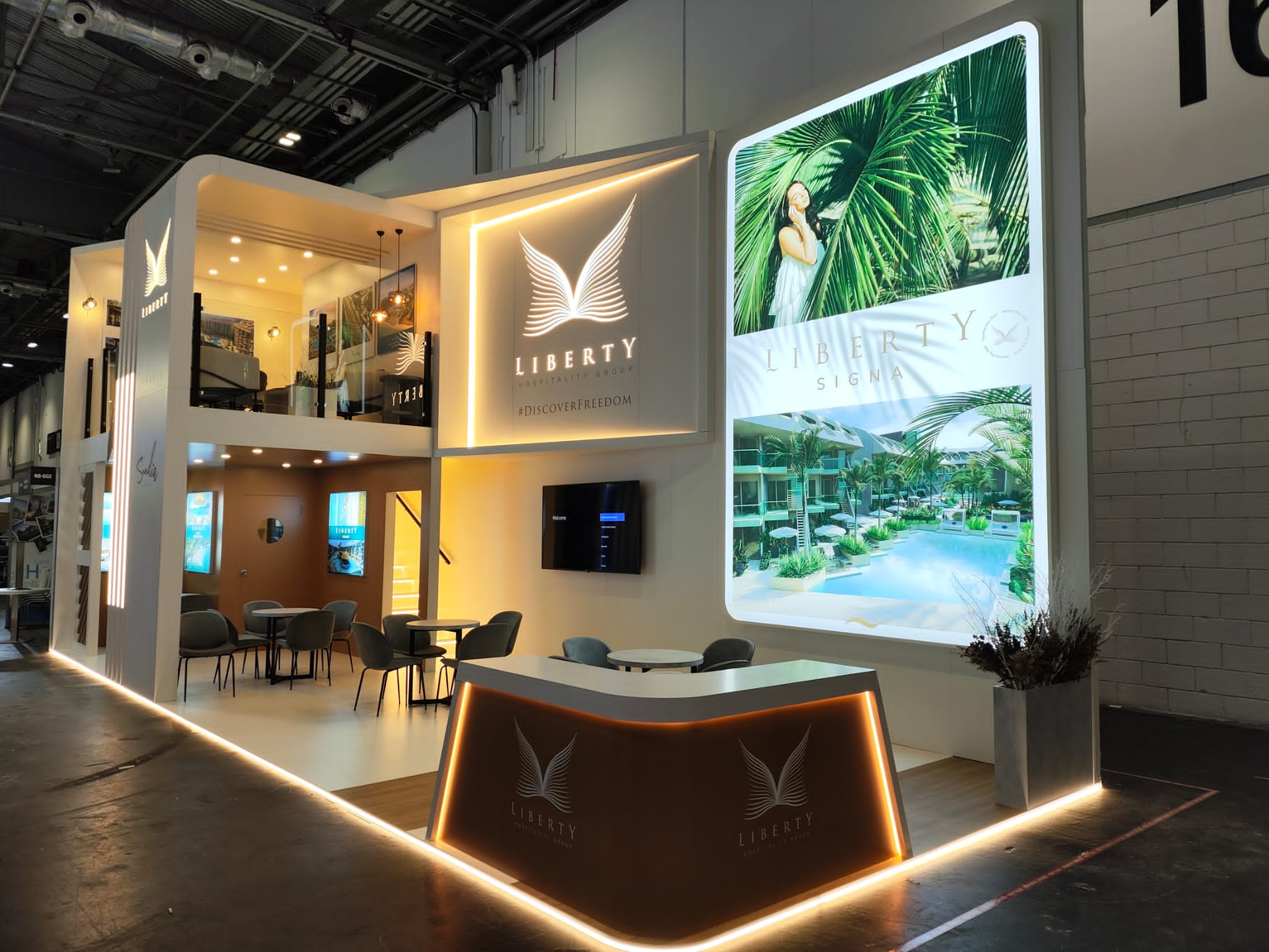
How to choose the right exhibition stand design and build partner for your next trade fair in Germany.
Germany is one of the world's most established exhibition markets, hosting internationally recognized trade fairs across industries ranging from food and technology to healthcare, furniture, automotive and industrial manufacturing.
For international companies, particularly those travelling from Turkey, the Middle East and other regions, exhibiting in Germany represents an important opportunity to connect with European buyers, distributors and business partners.
However, successful participation requires more than reserving exhibition space and arranging travel.
Choosing the right exhibition stand contractor in Germany is one of the most important decisions in the entire exhibition process.
A well-designed stand communicates brand identity, creates an engaging visitor experience and supports commercial objectives. Equally important, the stand must be manufactured, transported, installed and delivered according to the technical requirements and operational schedules of the exhibition venue.
Understanding how exhibition stand design and construction work in Germany can help international exhibitors make better decisions, control costs and reduce unnecessary risks.
1. Understanding the German Exhibition Market
Germany's exhibition industry is built around several major trade fair destinations, each serving different industries and international audiences.
Among the most important locations are:
Frankfurt: Known for international exhibitions covering consumer goods, automotive technology, lighting, building technologies and textiles.
Cologne: A major destination for food, furniture, gaming and other international industries.
Düsseldorf: An established exhibition centre for healthcare, industrial technologies, plastics, printing and retail.
Hannover: Internationally recognized for industrial technology and manufacturing exhibitions.
Berlin: A destination for consumer electronics, tourism, agriculture and technology-related events.
Munich: Home to major exhibitions in construction, electronics, logistics and environmental technologies.
Although these exhibition centres operate within Germany, they do not necessarily follow identical technical procedures.
Each venue may have its own requirements regarding construction heights, structural approvals, fire safety, material specifications, installation schedules and logistical access.
For this reason, selecting an exhibition stand builder should involve evaluating not only creative capabilities but also familiarity with the specific exhibition venue.
2. Why Design & Build Integration Matters
One of the most common challenges international exhibitors face is managing several independent suppliers for a single exhibition project.
A design agency may develop the concept, while a separate production company manufactures the structure. Logistics, electrical installation, graphics and on-site assembly may then be handled by additional subcontractors.
Although this arrangement can work, it also introduces more coordination points and potential communication gaps.
An integrated exhibition stand design and build approach brings the creative, technical and operational aspects of the project into a coordinated process.
This typically includes:
Creative concept development and brand interpretation
Spatial planning and visitor circulation
Technical drawings and construction documentation
Material selection and production engineering
Exhibition venue coordination and approval procedures
Manufacturing and quality control
Transportation, installation and dismantling
The objective is not simply to create an attractive stand, but to ensure that the approved design can be delivered accurately within the available time and budget.
For companies managing exhibitions from abroad, this level of coordination can be particularly valuable.
3. Understanding Exhibition Stand Regulations in Germany
Technical compliance is an essential part of exhibition stand construction in Germany.
Exhibitors and their contractors must follow the regulations established by the relevant exhibition venue and, where applicable, the event organizer.
These requirements may cover structural stability, fire protection, emergency access, electrical installations, construction materials and stand dimensions.
For example, Messe Frankfurt identifies specific types of stand construction that require approval, including certain large stands, two-storey structures, closed ceilings and special constructions.
The approval process may also require technical drawings and structural documentation to be submitted before installation begins.
Requirements can vary according to the exhibition, venue, hall and type of construction.
International exhibitors should therefore confirm several points before approving a final stand design:
Construction height: What is the maximum permitted height for the assigned stand location?
Structural approval: Does the proposed design require formal technical approval or engineering documentation?
Fire safety: Do the proposed materials comply with the applicable fire classification requirements?
Electrical and suspended elements: Are special approvals or venue-appointed service providers required?
Installation schedule: How much time is available for construction, inspection and final handover?
Dismantling: What are the venue's requirements for removing the stand and clearing the exhibition area?
Addressing these questions during the design phase can prevent costly revisions and last-minute complications.
4. Local Production or International Exhibition Contractor?
International exhibitors often face an important decision: should they work directly with a local German stand builder or appoint an international exhibition contractor?
Both approaches have advantages.
A local contractor may offer proximity to the exhibition venue, established supplier relationships and familiarity with regional procedures.
An international design and build partner, on the other hand, may offer greater continuity across multiple exhibitions and markets.
For companies participating in trade fairs in Germany, Italy, France, the Netherlands and other European countries, maintaining a consistent brand experience can be particularly important.
An effective international delivery model often combines centralized design and project management with a reliable network of regional production and installation partners.
This approach can provide several benefits:
Consistent brand presentation across different exhibitions
Greater flexibility in production and material sourcing
Coordinated project management across multiple locations
Access to regional installation teams and specialist suppliers
More efficient communication between the exhibitor and delivery teams
Ultimately, the most important factor is not where the contractor's headquarters are located.
It is whether the contractor has the technical knowledge, production capabilities and operational network required to deliver the project successfully.
5. What Determines Exhibition Stand Costs in Germany?
The cost of building an exhibition stand in Germany depends on several factors beyond the total floor area.
Two stands of identical size can have significantly different budgets depending on their design complexity, construction methods and technical requirements.
The main cost drivers typically include:
Stand size and layout
Larger stands generally require more materials and installation resources. However, the complexity of the layout can be just as important as the total area.
Design complexity
Custom architectural features, curved structures, elevated platforms, suspended elements and specialized finishes may increase engineering and production costs.
Materials and finishes
The selection of construction materials, surface finishes, furniture, lighting and display systems can significantly influence the overall budget.
Digital and interactive features
LED walls, interactive screens, integrated technologies and specialized audiovisual systems may require additional equipment, installation and technical support.
Logistics and installation
Transportation distances, loading arrangements, venue access, installation periods and labour requirements all affect project costs.
Venue services
Electrical connections, rigging, water supply, internet access, cleaning, waste handling and other exhibition services may be charged separately.
When comparing quotations from exhibition stand contractors in Germany, exhibitors should evaluate the complete scope of work rather than focusing exclusively on the initial price.
A lower quotation does not necessarily represent better value if important services are excluded.
A transparent proposal should clearly identify what is included, what is optional and which costs remain the exhibitor's responsibility.
6. The Importance of a Strong Production and Installation Network
Exhibition projects operate under strict deadlines.
Unlike many conventional construction projects, an exhibition stand must be completed before a fixed opening date. Delays can directly affect the exhibitor's ability to welcome visitors and conduct business.
This makes operational reliability a critical consideration.
A strong production and installation network provides more than manufacturing capacity. It supports the coordination of materials, logistics, specialist labour, technical services and on-site execution.
For international exhibitors, several operational questions deserve attention:
Where will the stand components be manufactured?
Who will supervise production quality?
How will materials be transported to the venue?
Who will manage communication with the exhibition organizer?
Will an experienced project manager be present during installation?
How will unexpected technical issues be resolved on-site?
Who is responsible for final handover and dismantling?
The ability to answer these questions clearly is often a stronger indicator of contractor reliability than an impressive design presentation alone.
A successful exhibition stand is not simply designed well. It is executed well.
7. Common Mistakes International Exhibitors Should Avoid
Companies exhibiting in Germany for the first time, or entering a new exhibition venue, can reduce unnecessary costs by avoiding several common mistakes.
Starting the design process too late
Late planning reduces the time available for design development, technical approvals, production and logistics.
Beginning early creates greater flexibility and allows potential problems to be identified before they affect the project schedule.
Approving a design without checking technical feasibility
An impressive 3D rendering does not automatically mean that the proposed structure can be approved or constructed within the venue's regulations.
Technical feasibility should be considered throughout the creative process.
Comparing quotations without reviewing the scope
Different contractors may include different services in their proposals.
Production, transportation, installation, electrical work, venue charges and dismantling should be reviewed carefully to ensure a fair comparison.
Underestimating installation logistics
Vehicle access, loading restrictions, installation permits and limited construction periods can influence project delivery.
A realistic installation schedule is essential.
Focusing on appearance without considering functionality
A visually striking stand must also support the exhibitor's business objectives.
Meeting areas, product presentation, visitor circulation, storage and staff operations should all be integrated into the design.
8. Questions to Ask Before Choosing an Exhibition Stand Contractor
Before appointing an exhibition stand design and build company in Germany, international exhibitors should consider asking the following questions:
Have you completed exhibition stand projects in Germany or at the relevant exhibition venue?
Do you provide both creative design and technical production services?
How do you manage venue regulations and technical approvals?
Where will the stand be manufactured, and who supervises quality control?
Do you have an established production and installation network in Europe?
Will one dedicated project manager coordinate the project from concept to handover?
What services are included in the quotation?
How are design changes and unexpected site conditions managed?
Can you provide relevant examples of completed exhibition projects?
Who will be responsible for installation, on-site support and dismantling?
The answers should provide a clear understanding of the contractor's capabilities, responsibilities and approach to project delivery.
9. Planning a Successful Exhibition in Germany
A successful exhibition begins long before the first visitor enters the stand.
It starts with understanding the brand, defining commercial objectives and translating those objectives into a functional exhibition environment.
The design should communicate the company's identity while supporting meaningful interactions with customers, distributors and industry professionals.
At the same time, production quality, technical compliance, logistics and installation must be managed with equal attention.
For international exhibitors, the ideal exhibition stand partner combines creative thinking with practical construction knowledge and dependable operational execution.
Whether preparing for a trade fair in Frankfurt, Cologne, Düsseldorf, Hannover, Berlin or Munich, choosing a capable design and build partner can make the entire exhibition process more predictable, efficient and successful.
Planning Your Next Exhibition in Germany?
From the initial concept to final on-site installation, successful exhibition participation requires the right combination of design expertise, technical knowledge and reliable execution.
Working with an experienced exhibition design and build partner with an established international production network can help transform ambitious ideas into well-executed exhibition environments.
Explore our exhibition stand design & build capabilities and discover how we approach projects across Europe.